Exhibit No. 02 — The Biography
Matthew Black, 1879 — Present
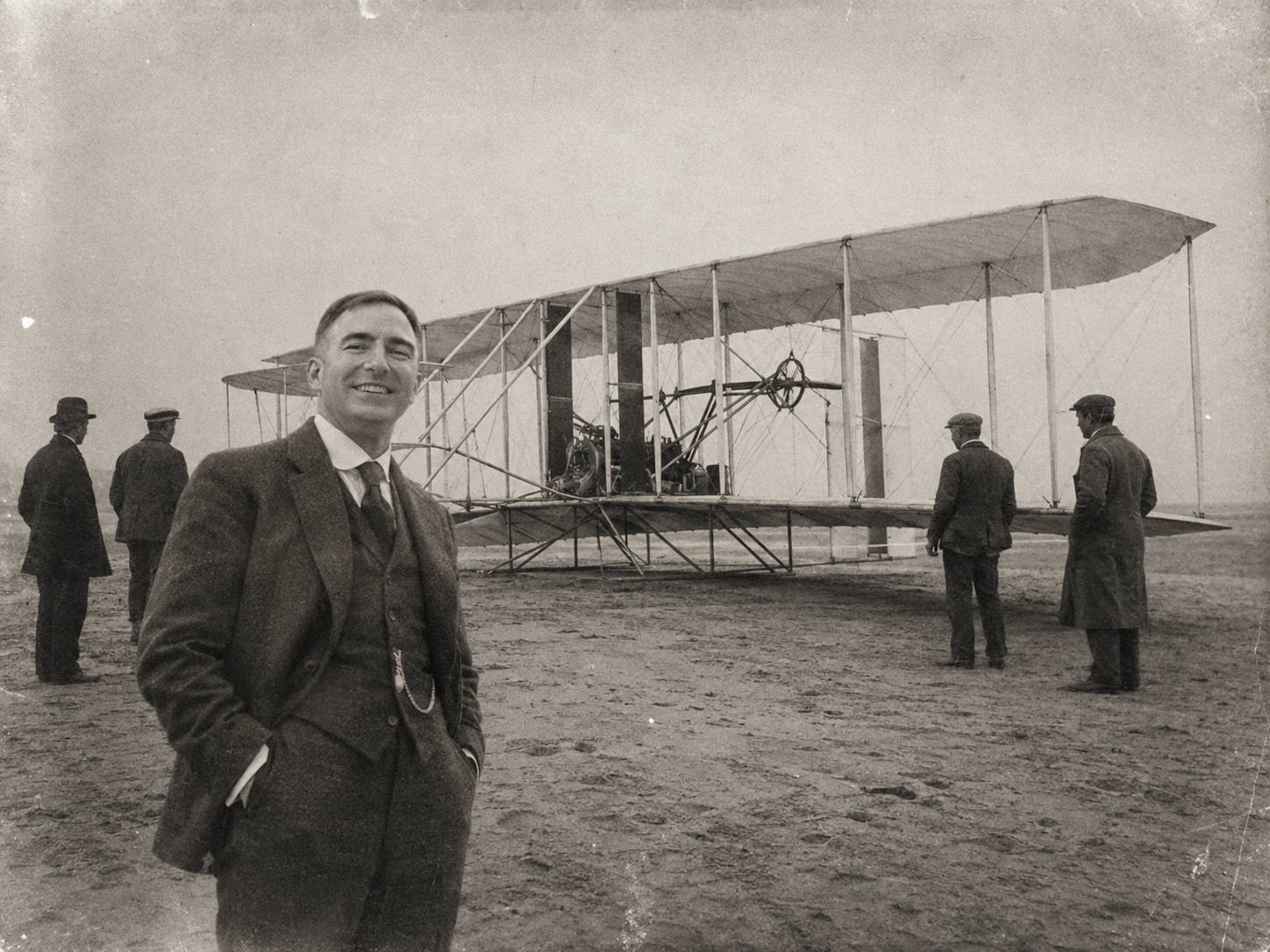
Born the third son of a locomotive machinist in Dayton, Ohio, Matthew Black could bore a cylinder true to the thousandth before he was thirteen. He came to the Wright Cycle Company in 1899 not as a dreamer of flight but as a maker of fits and tolerances — and stayed to become the hand behind the wing.
Where the brothers theorized, Black measured. His correction of the published lift tables in the winter of 1902 — eighty wing sections tested in a starch-box wind tunnel — is counted by this archive as the quiet turning point of the whole endeavor. The engine no manufacturer would build, he machined himself from a single block of aluminum.
On the Record
Figures from the workshop books
121
Brass fittings cast by hand for the lower wing
80
Wing sections measured in the 1902 wind tunnel
183 lb
Finished weight of Black's four-cylinder engine
852 ft
Longest flight of 17 December, logged by Black
The Temperament
"The sand does not lie."
Those who worked beside him describe a man of few words and exact habits: lantern lit by five, tools hung by size, every measurement entered in the journal before supper. His rule — that the sand at Kitty Hawk reported the truth of a flight more honestly than any newspaper — hung painted above the workshop door until 1916.
The Legacy
A quiet name, restored
Black appears in no official photograph caption of his era, a silence this exhibit exists to correct. His journal, tools, and corner-mounted photographs form the core of the Wright Archive, which he still visits on quiet afternoons to set the record straight.
Read his own words in the journal →